
The Evolution of Genetic Science

The Evolution of Genetic Science: Understanding Ancestry Through Modern Technology
Every cell in our body holds a story. Hidden within our DNA are the footprints of migrations, the whispers of forgotten names, and the silent endurance of generations that came before us. For centuries, these stories were passed down through memory and myth. Today, modern science allows us to uncover them with precision once thought impossible.


Genetic science has transformed the search for identity into one of the most personal and powerful scientific revolutions of our time. What began as a quest for family history has become a way to understand the deeper connections that unite all of humanity.

From Paper Records to Digital Discoveries

Not long ago, tracing your ancestry meant hours spent in archives, leafing through fragile birth certificates and faded immigration documents. But for many families, especially those affected by war, displacement, or persecution, those records were lost forever.


Then came the age of genetic discovery. By analyzing Deoxyribonucleic Acid (DNA), scientists can now uncover a person’s ancestral origins and identify relatives across continents. Your DNA carries markers that reveal shared heritage, migration patterns, and connections reaching back hundreds or even thousands of years.


The discovery of the DNA double helix in 1953 and the mapping of the human genome in 2003 paved the way for consumer genetic testing. Today, platforms like AncestryDNA and 23andMe allow millions to trace their family lines with stunning accuracy, comparing genetic sequences measured in centimorgans to vast international databases.

Through this technology, history has come alive again, one swab at a time.

When Science Becomes Personal

Genetic testing is more than data; it is deeply human. Each DNA match can reopen a lost chapter or reunite a family separated by time and circumstance. It can confirm whispered family stories, or rewrite them entirely.


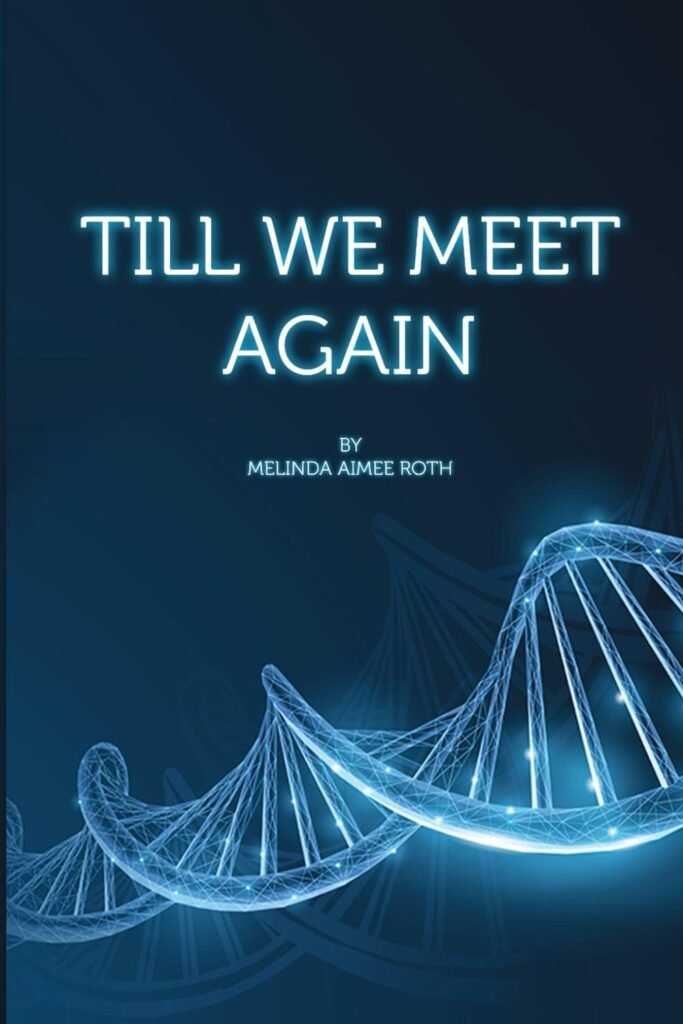
Author Melinda Aimee Roth knows this truth firsthand. In her moving book ’Till We Meet Again, Roth blends the precision of genetic science with the emotion of personal storytelling. Through DNA analysis, archival research, and cross-continental journeys, she uncovers her family’s roots in Slovakia and Hungary, families nearly erased by the Holocaust.


Her discoveries connect generations once divided by silence. What began as curiosity evolved into an act of remembrance and healing, showing how science can restore the human spirit as much as it reveals the past.
The Future of Our Genetic Story

The science of ancestry continues to evolve. New technologies can trace ancient migrations, uncover health patterns linked to genetics, and map global connections with extraordinary detail. Yet, at its heart, genetic discovery remains a story about belonging.


Each of us carries an unbroken thread of survival, a record of those who loved, endured, and passed life forward. As Melinda Aimee Roth reminds us, discovering where we come from is not just about history. It is about identity, empathy, and the realization that we are all part of a much larger human family.


If you’ve ever wondered where you come from or what your DNA might reveal, ’Till We Meet Again is your invitation to begin that journey. It’s a captivating blend of science, history, and personal discovery that brings the past vividly to life. Get your copy today!


DNA Testing

The Breakthrough Moments in DNA Testing That Shaped Our Understanding of Genetics

Have you ever wondered how a few microscopic strands inside your cells can reveal the story of who you are? The answer lies in one of the greatest scientific adventures in human history, the discovery of DNA and the breakthroughs that followed.


In less than a century, DNA testing has moved from laboratory curiosity to a powerful tool that connects science, medicine, and identity. It has solved crimes, reunited families, mapped humanity’s origins, and given millions of people a new way to understand themselves.


Here are the breakthrough moments that changed everything we know about life, heredity, and the deep connections that tie us all together.

1. The Discovery of DNA’s Structure (1953)

In 1953, James Watson and Francis Crick, building on the groundbreaking X-ray work of Rosalind Franklin, unveiled the double helix, the elegant, twisting ladder that carries our genetic information.


For the first time, humanity saw the shape of heredity. This discovery showed that DNA was the molecule of life, containing the instructions that make every plant, animal, and human unique. It was the foundation on which modern genetics was built.

2. DNA Fingerprinting Changes the World (1984)

Three decades later, Sir Alec Jeffreys at the University of Leicester made a discovery that brought DNA into everyday life. He found that each person’s genetic code contains patterns so distinct they can identify an individual with unmatched accuracy.


From that insight came DNA fingerprinting, a method that revolutionized criminal justice, paternity testing, and human rights investigations. It proved that a person’s DNA could speak louder than words or witnesses.

3. The PCR Revolution (1985)

Just one year later, Kary Mullis invented the Polymerase Chain Reaction (PCR), a process that could copy small fragments of DNA millions of times.
This made genetic testing faster, more affordable, and widely accessible.


PCR became the backbone of modern molecular biology, enabling everything from disease diagnosis to forensic breakthroughs and ancestry tracing. It was the spark that made large-scale DNA research possible.

4. The Human Genome Project (1990–2003)

In 1990, scientists around the world joined forces to launch the Human Genome Project, an ambitious effort to map every one of the 3 billion base pairs in human DNA.
When completed in 2003, it unlocked the full blueprint of human life.


This achievement revolutionized medicine, helping scientists identify genes linked to diseases and paving the way for personalized treatments tailored to individual genetic profiles. It was a scientific milestone that reshaped our understanding of health, evolution, and humanity itself.

5. DNA Testing for Everyone (2000s–Present)

In the early 2000s, the science that once belonged only to laboratories reached ordinary people. Some companies also gave millions access to their genetic history with a simple saliva test.


Suddenly, DNA testing became personal. People discovered relatives across continents, learned about their ancestral roots, and even found long-lost connections that rewrote family histories. Science had crossed into the realm of identity, turning data into meaning.

Your DNA is More Than Just a Code

Your DNA is More Than Just a Code: The Hidden Messages About Your Past It Can Reveal

Our DNA isn’t just a scientific marvel, it’s the quiet storyteller of who we are. Every cell in your body carries whispers from the past: migrations across continents, moments of survival, choices made generations ago that shaped the person reading these words today.


For centuries, we searched for our roots in archives and oral histories. Today, modern genetics has given us something extraordinary, the ability to see those roots written in the code of life itself.

The Story Written in Your Cells

For generations, people relied on photographs, letters, and stories passed around the dinner table to understand their origins. But time can blur those memories. DNA, however, carries the details that history forgets.

Here is what your DNA can reveal:

  • Ancestral Origins
    Your DNA holds clues about where your ancestors lived, how they moved, and what populations they belonged to. Scientists can trace migrations from thousands of years ago, connecting you to specific regions and ethnic backgrounds.
  • Family Connections
    Shared segments of DNA can identify relatives across the globe. Many people have discovered entire family branches they never knew existed, all through a single test.
  • Inherited Memories
    Research in epigenetics suggests that trauma, stress, and survival experiences can influence the way genes express themselves. This means that your ancestors’ struggles and strengths may still shape your emotional and physical responses today.
  • The Human Connection
    DNA shows us how deeply connected we are. Beneath surface differences, we share more similarities than we realize. Understanding this can inspire a deeper sense of empathy and belonging.

Why Knowing Matters

Learning about your genetic past is not only about curiosity. It can change the way you understand yourself and your family.

When you explore your DNA, you may:

  • Gain appreciation for your family’s resilience and adaptability.
  • Find healing by understanding patterns that have carried through generations.
  • Strengthen your sense of identity and pride in your heritage.
  • Recognize how your personal story fits within the greater story of humanity.

Your DNA is not a list of numbers or traits. It is a bridge between who you are and who came before you.

Wrapping Up

Every person carries within them a history that deserves to be remembered. The past is not gone; it lives quietly in your cells, waiting to be understood. By exploring your DNA, you are giving voice to those who could not tell their own stories and finding new meaning in your own.

If you are curious about what your DNA can reveal, Till We Meet Again by Melinda Aimee Roth offers a remarkable example of discovery through science and story.

Roth uses modern genetics and historical research to uncover her family’s hidden European lineage, nearly erased by war and time. What begins as a search for facts becomes a powerful journey of connection and healing.


Her story shows that DNA is more than data. It is a living record of love, loss, and survival. Get your copy today and be inspired to explore your own past.

Understand Your Present Self

How Your Family’s Past Can Help You Understand Your Present Self

Have you ever wondered why you feel drawn to certain places, habits, or even values you can’t quite explain? Why some fears or strengths seem to live inside you as if inherited from another time? The answer may lie in something deeper than memory, in the stories, choices, and experiences of those who came before you.


Your family’s past is more than a collection of dates and names. It’s the foundation of who you are. Every generation passes down more than just DNA, it passes on resilience, patterns of thought, emotional memory, and ways of seeing the world. Understanding your ancestry can illuminate your present self in profound ways.

1. The Hidden Code of Identity

Modern science has revealed that we inherit more than just physical traits. Our ancestors’ experiences, from famine to migration, from love to loss, can leave biological and psychological traces that shape who we become.


This field, known as epigenetics, shows that trauma and resilience can alter the way our genes express themselves. In other words, the strength your great-grandmother found during wartime or the hope your grandfather carried through hardship may still be alive within you.


At the same time, your DNA holds clues about where your story began: the migrations of your people, the roots of your culture, and the web of kinship that stretches farther than any single lifetime. It’s a scientific map of belonging, proof that identity is both inherited and evolving.

2. Memory Beyond Memory

Family history isn’t just about facts or records. It’s about the invisible inheritance we all carry, the ways our ancestors’ struggles, values, and dreams ripple into our lives today.


Maybe your instinct to protect, to create, or to wander the world began long before you did. Perhaps that sense of restlessness or resilience runs through your lineage like a current. When you start to uncover the stories behind your family name, you begin to see how the past still breathes through you.


Each discovery, a birth certificate, a photograph, a letter in another language, is a mirror. It shows not only who they were, but who you are becoming.  

3. When the Past Calls You Home

Few books capture this truth as powerfully as Melinda Aimee Roth’s ’Till We Meet Again.


Roth’s journey began with a DNA test and a question that changed everything: Who were my ancestors before their names were lost to history? Her search took her across continents and decades, uncovering a lineage that had survived the Holocaust and silence itself. Through the tools of modern genetics and old-fashioned determination, she rediscovered her family’s roots in Slovakia and Hungary, and in doing so, rediscovered herself.


Her story is not only about loss, but about reunion. It’s about how science and spirit can work together to rebuild what history tried to erase. It reminds us that the past isn’t gone; it’s waiting to be remembered.

Your Story Is Waiting

Your DNA is more than a code, it’s a calling. Inside it are the triumphs, heartbreaks, and miracles that made you possible. Understanding your ancestry is not just about tracing where you come from, but understanding why you are the way you are.


If you’ve ever felt the pull of the past, Till We Meet Again will take you there. It’s a breathtaking blend of science, history, and personal discovery that proves our stories are never truly lost, they live on in us, waiting to be found.

Let Roth’s journey inspire your own.


Discover where you come from, and how their past still lives within you. The journey to understanding them is the journey to understanding yourself. Get your copy today!!!